Is Your Mattress or Your Back the Problem?
Updated:

If you wake up with lower back pain, it’s natural to blame your mattress.
Many people assume that replacing their mattress will solve the problem. Sometimes it does. However, waking up with back pain does not automatically mean your mattress is responsible.
In many cases, morning back pain is linked to an underlying spinal condition rather than the bed itself. Understanding the difference can help you avoid unnecessary expense and identify whether your symptoms may need further investigation.
Can a Mattress Cause Lower Back Pain?
Yes, a mattress can contribute to lower back pain if it no longer provides adequate support.
Over time, mattresses can sag, lose their shape, and provide uneven support for the spine. This may place additional stress on the muscles, joints, and discs in the lower back while you sleep.
However, many people replace their mattress only to discover that their symptoms remain unchanged. This is because back pain can have several causes, and the mattress may only be part of the picture.
Mattress or Back Pain? Try This Simple Check
While there is no way to diagnose the cause of your back pain without a proper assessment, paying attention to a few patterns can provide useful clues.
Ask yourself these questions:
- Do you wake up with pain that improves within 15 to 30 minutes?
- Do you sleep better in hotels, guest rooms, or other beds?
- Is your mattress more than 7 to 10 years old?
- Does your pain return later in the day when sitting, walking, or exercising?
- Do you experience numbness, tingling, or pain travelling into the leg?
If most of your answers relate to sleep and the bed itself, your mattress may be contributing to the problem.
If your symptoms continue throughout the day, occur regardless of where you sleep, or are accompanied by leg symptoms, an underlying spinal condition may be more likely.
Mattress or Back Pain? Quick Comparison
| Symptom | Mattress Issue | Condition Issue |
|---|---|---|
| Pain mainly when you wake up | ✓ | |
| Symptoms improve within 15-30 minutes | ✓ | |
| Mattress is over 7 to 10 years old | ✓ | |
| Sleep better in another bed | ✓ | |
| Pain continues throughout the day | ✓ | |
| Sitting makes symptoms worse | ✓ | |
| Pain travels into the leg | ✓ | |
| Numbness or tingling | ✓ | |
| Symptoms gradually worsening | ✓ |
* This checklist cannot diagnose the cause of your symptoms, but it can help identify whether your mattress, an underlying spinal condition, or a combination of both may be contributing to your discomfort.
Why Does My Back Hurt More in Bed Than During the Day?
Many people assume that pain in bed means the mattress is responsible. However, symptoms often become more noticeable overnight because the spine remains in one position for several hours.
Conditions such as arthritis, disc degeneration, and nerve irritation may feel worse after prolonged periods of inactivity. This is one reason why some people wake up feeling stiff and sore but gradually improve as they move around.
If you regularly wake up with discomfort, understanding why lower back pain is worse in the morning may provide additional clues about the underlying cause.
5 Signs Your Mattress Could Be the Problem
1. Your Mattress Is More Than 7 to 10 Years Old
Most mattresses lose support as they age. If your mattress is approaching ten years old and you regularly wake up feeling stiff or uncomfortable, it may no longer be supporting your spine effectively.
2. You Notice Visible Sagging
Dips, lumps, or uneven areas in a mattress can affect spinal alignment throughout the night. Even small areas of sagging may place additional pressure on the lower back.
3. You Sleep Better Somewhere Else
One of the strongest signs that your mattress may be contributing to your symptoms is noticing a difference when sleeping elsewhere.
If you regularly wake up with back pain at home but feel more comfortable in a hotel, guest room, or holiday accommodation, your mattress could be part of the problem.
While this is not always conclusive, a consistent pattern is worth paying attention to.
4. Your Pain Improves Quickly After Getting Up
Pain that eases within a short period after waking is often associated with sleeping position, mattress support, or overnight stiffness.
5. Symptoms Started Around the Time You Changed Mattress
If your symptoms began shortly after buying a new mattress, it may be worth considering whether the firmness or level of support is suitable for your needs.
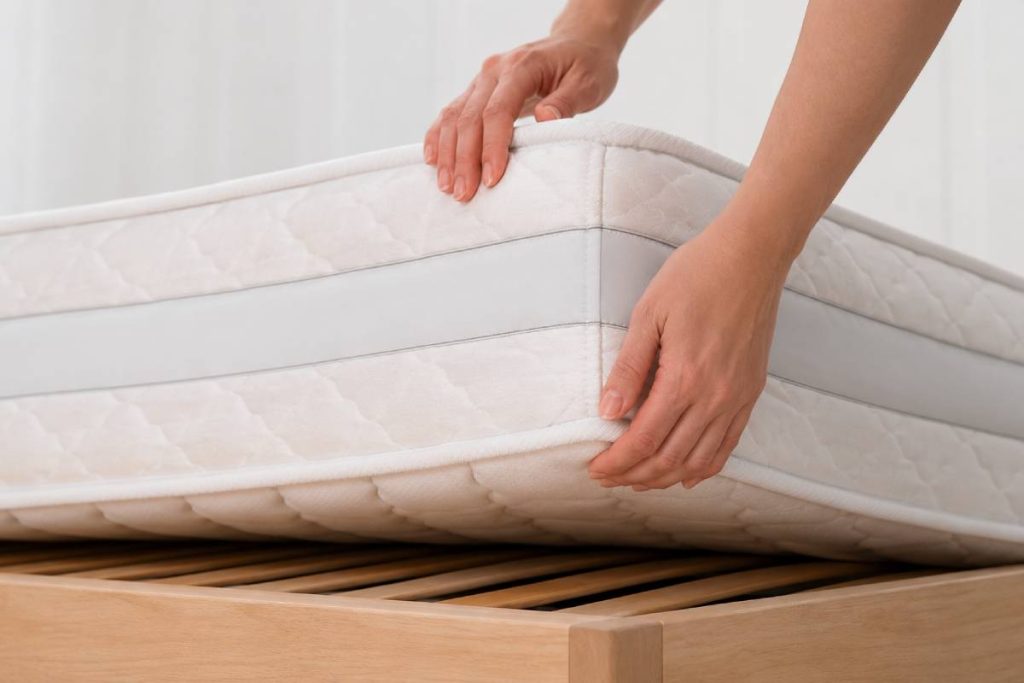
5 Signs Your Back Could Be the Problem
1. Pain Happens Regardless of Which Bed You Sleep In
If you experience similar symptoms whether you’re at home, on holiday, or staying elsewhere, the mattress becomes less likely to be the sole cause.
2. Symptoms Return Throughout the Day
Back pain linked to an underlying spinal condition often returns during everyday activities rather than remaining limited to the morning.
3. Sitting Makes Symptoms Worse
Many people who wake up with back pain also notice discomfort when seated for long periods. Understanding why sitting makes lower back pain worse may provide additional clues about what is causing your symptoms.
4. Pain Travels Into the Leg
Pain, tingling, numbness, or weakness travelling into the buttock, thigh, calf, or foot may indicate nerve irritation.
Learning more about sciatica symptoms may help you understand whether this could be contributing to your discomfort.
5. Symptoms Are Becoming More Frequent
Back pain that gradually becomes more common or more severe over time is less likely to be explained by mattress quality alone.
A New Mattress Doesn’t Always Fix Back Pain
It is easy to assume that waking up with back pain means your mattress needs replacing.
However, many causes of morning back pain originate within the spine rather than the mattress itself. Conditions such as arthritis, disc degeneration, spinal stenosis, and nerve irritation may become more noticeable after several hours of inactivity during sleep.
For this reason, understanding why your symptoms occur is often more valuable than immediately investing in a new mattress.
If you experience ongoing back pain, identifying what is contributing to your symptoms can help guide the most appropriate treatment.
Should You Replace Your Mattress?
If your mattress is old, visibly sagging, or no longer feels supportive, replacing it may be worthwhile.
However, if your symptoms continue despite changing your mattress, or if your pain occurs regardless of where you sleep, it may be time to consider whether an underlying spinal condition could be contributing.
The goal should not simply be to buy a new mattress, but to understand what is causing the symptoms in the first place.
What Is the Best Sleeping Position for Lower Back Pain?
The best sleeping position is usually one that keeps your spine in a neutral, supported position throughout the night.
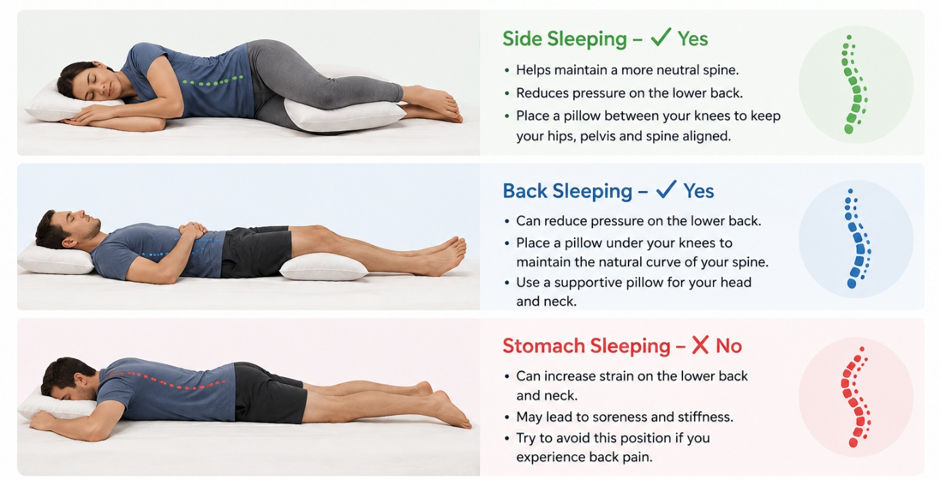
Many people find that sleeping on their side with a pillow between their knees, or on their back with a pillow under their knees, helps reduce morning discomfort.
Small changes in your sleeping position and the right support can make a big difference. If your back pain continues, it may be worth getting it properly assessed.
When Should You Seek Professional Advice for Back Pain?
If your symptoms continue despite replacing your mattress, or if your pain is becoming more frequent, it may be worth seeking further assessment.
You should also consider professional advice if pain spreads into the leg, affects your sleep, limits daily activities, or is accompanied by numbness or tingling.
Understanding when to seek treatment for lower back pain can help you recognise when symptoms may require specialist assessment.
Dan Fagan FRCS, Consultant Spinal Surgeon at SpineArt provides specialist spinal assessment for patients across North Yorkshire and the North East. Identifying the cause of your symptoms early can help you understand your treatment options and prevent the problem from becoming more disruptive over time.
Mr. Fagan offers private consultations at:
Frequently Asked Questions
Your mattress may be contributing to your symptoms if it is more than 7 to 10 years old, visibly sagging, or if you consistently sleep better in another bed. Pain that improves shortly after getting up can also suggest that mattress support or sleeping position may be playing a role.
Yes, an old mattress can contribute to lower back pain if it no longer provides adequate support. Over time, mattresses can lose their shape and create uneven pressure points, which may affect spinal alignment during sleep. However, not all morning back pain is caused by the mattress itself, and underlying spinal conditions should also be considered.
Many people find that their symptoms improve once they start moving around. This is because movement helps loosen stiff muscles and joints, improves circulation, and reduces the effects of remaining in one position for several hours overnight. If pain regularly returns throughout the day, an underlying spinal condition may be more likely.